

Feeling overwhelmed after a new fatty liver diagnosis? You’re not alone. With so much (often conflicting) information out there, it can be hard to know what’s actually helpful—or where to even begin. The good news? Making meaningful changes to support your liver health is absolutely possible, and starting with a simple, realistic meal plan can make a big difference. Getting solid nutrition guidance early on is one of the most important steps you can take.
The liver is your body’s “metabolic hub”—it plays a key role in digestion, nutrient absorption, and storage. While heavy alcohol use is a well-known cause of liver damage, many cases of fatty liver disease are linked to diet and lifestyle habits. That’s why it’s so important to have routine medical testing done as part of your regular checkups. Catching signs of fatty liver early gives you the chance to make changes that can prevent the condition from progressing and causing long-term liver damage.
I always encourage my clients to ask their doctor to assess liver function annually—even if they feel fine. Early intervention is powerful, and working with a Registered Dietitian can be one of the most helpful tools for getting started. If you’ve been diagnosed with fatty liver, ask for a referral to a dietitian right away (sometimes you have to request it!). A meal plan tailored to support your liver can help take the guesswork out of what to eat.

The liver plays a key role in lipid metabolism, movement, and storage. It makes digestive fluid (bile) for lipid digestion and specialized proteins (lipoproteins) for moving lipids throughout the body. The liver also processes dietary fats into energy and ships the extra away for storage in adipose (fat) tissue. Due to its role with lipids in the body, it is normal to have a small store of fat in the liver. In someone with healthy liver function, that’s around 5-10% of your liver is fat (by weight). Anything beyond this is “fatty liver” with severity dependent on what percentage of the liver is fat.
Sometimes, the liver is not able to process digested fat molecules correctly – this leads to a build-up of fat in the liver. Fatty liver can be classified as either nonalcoholic fatty liver disease (NAFLD) or nonalcoholic steatohepatitis (NASH) based on severity and the presence of inflammation and cell damage.
NAFLD is often called the “silent liver disease” as it tends to be asymptomatic and often will not result in permanent liver damage. The key distinguishing factor between NAFLD and NASH is the presence of inflammation and cell damage. NASH is defined as the presence of inflammation and damage in fatty liver. As the liver becomes increasingly inflated with fat, it becomes inflamed, cells begin to die, and the liver begins to lose function. This is what leads to unpleasant symptoms like liver/abdominal pain, severe tiredness, weakness, weight loss, yellowing of skin/eyes, spider-like blood veins, and long-lasting itching. NASH can lead to permanent scarring and damage, and in extreme cases, liver cancer and liver failure if you don’t get help and make guided changes. This is where dietitians are a great resource! Let’s look at the role of diet and other factors in how fatty liver can occur.
Your liver plays a key role in how your body processes and manages fat. It helps produce bile for digesting lipids, creates specialized proteins (called lipoproteins) to transport lipids hrough the body, and converts dietary fats into energy. It also stores a small amount of fat—which is completely normal. In a healthy liver, fat makes up about 5–10% of its weight. When fat content exceeds that range, it’s considered fatty liver, with severity depending on just how much fat has accumulated.
Fatty liver develops when the liver can’t properly process or break down fats, leading to a build-up within the liver tissue itself. There are two main types of fatty liver disease:
With NASH, symptoms may eventually show up, including liver or abdominal pain, fatigue, unexplained weight loss, yellowing of the skin or eyes (jaundice), visible blood vessels, or persistent itching. While these symptoms often appear later, early detection and nutrition-focused care can help prevent progression and support healing.
This is exactly where a Registered Dietitian can make a big difference—helping you understand the role of diet and lifestyle in managing or even reversing fatty liver. Let’s take a closer look at how it all connects.
There are several diet and lifestyle factors that can contribute to the development of fatty liver. It’s often linked with other health conditions that affect how your body processes fats and sugars, including:
One reason there has been an increase in fatty liver in the United States is that the standard American diet (SAD) is high in saturated fats, added sugars, and ultra processed foods – all of which have been shown to increase risk of health issues like diabetes, high cholesterol, heart disease, obesity, and overall disease risk. SAD is also low in vitamins, minerals, and complex carbohydrates (fiber). As many as 95% of Americans likely do not meet daily recommended fiber intake goals – this can be a major contributing factor to poor blood sugar control and excess fat in the body. With the prevalence of poor diet in the USA, it is not surprising that around 25% of Americans have NAFLD, and about 5% have NASH.
Unfortunately, it is also possible for there to be no clear reason for fatty liver to happen, and there are other components that are thought to contribute (like genetics or medications you have to take). This is another reason why regular health check ups and preventative/early lifestyle changes are so beneficial – you might have zero known risk factors and still have altered liver function which can progress and become problematic if not addressed.
The good news? Many of these factors are responsive to nutrition and lifestyle changes—which is why early intervention and support are so important. You can treat the factors that lead to NAFLD like high triglycerides, high cholesterol, high blood sugar/diabetes, and even reduce the amount of fat in your liver by consuming a well-balanced, anti-inflammatory plant-based diet – and I’m here to help you get started. This is the foundation of what myself and other Registered Dietitian Nutritionists do and how we help people. And I can tell you: it makes a huge difference.
An anti-inflammatory diet focuses on eating a diet rich in nutritious foods that have anti-inflammatory nutrients like vitamins A, C, E, omega fatty acids, complex carbohydrates, and more. The foods known to be dense sources of these nutrients include whole grains, fruits and vegetables, and plant-based proteins.
Let’s take a look at how these nutrients support your health and liver:
Examples: Vitamins A, C, E, zinc, selenium, copper
Food sources: Fruits, vegetables, beans and legumes, nuts, seeds
Benefits:
Types: Soluble and insoluble fiber
Food sources: Whole grains, fiber-rich fruits and vegetables, beans and legumes, nuts, seeds
Benefits:
Types: Monounsaturated and polyunsaturated fats, including omega-3 and omega-6 fatty acids
Food sources: Nuts, seeds, avocados, olives, plant oils (like olive and flaxseed), beans and legumes
Benefits:
Types: Carotenoids, flavonoids, polyphenols
Food sources: Whole grains, fruits, vegetables, beans and legumes, nuts, seeds
Benefits:
The Anti-Inflammatory Fatty Liver Guide takes the next step beyond this article with practical, dietitian-created guidance for building sustainable eating habits that support liver health, blood sugar, and inflammation. Get the guide here.

Making a change to your habits and lifestyle takes time, energy, commitment, and thoughtful planning. Many people just don’t have enough of these to dedicate to properly investing in nutrition – and it can get overwhelming fast. As a Registered Dietitian, I am here to support you in these things to help you improve your nutrition with ease and confidence.
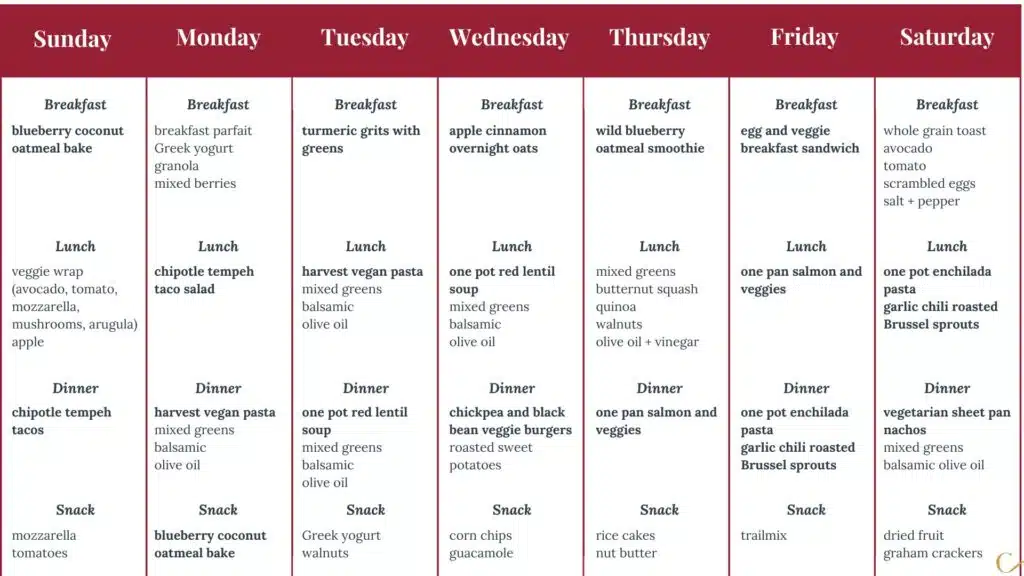
I am constantly developing quick and easy plant-based anti-inflammatory recipes for my clients to help reduce the amount of time spent in the kitchen while increasing their intake of important nutrients. I made this fatty liver meal plan to incorporate some of my favorite anti-inflammatory recipes to help take some of the pressure off of planning your meals, save time, and get great nutrition to support your liver health.
With easy access to the recipes included (linked below each week), you can efficiently make a list and head to your local grocery store and grab all your groceries for the week in one go. Then the fatty liver meal plan guides you through strategically using these great recipes, designed to leave you leftovers that you can take for lunch later in the week. No more constantly worrying what’s for dinner or raiding the vending machine for lunch (this helps you strategically use your leftovers as well).
This fatty liver meal plan was designed for you to be plant-based – a plant-based diet has repeatedly demonstrated its benefits for helping with blood sugar control, cholesterol management, and overall disease prevention. This is because plant-foods have high concentrations of anti-inflammatory, antioxidant nutrients and those nutrients that are “pro-disease” like saturated fats and large amounts of simple sugars are much less common in plant-foods versus animal products and ultra-processed foods. The foods I’ve included in your fatty liver meal plan were selected for their anti-inflammatory nutrients and abundance of healthy liver nutrients like B vitamins, omega fatty acids, antioxidants, and fiber.
Use this 3-week fatty liver meal plan to plan your grocery shopping, discover easy delicious anti-inflammatory recipes, and easily navigate your new approach to your diet, nutrition, and liver health.
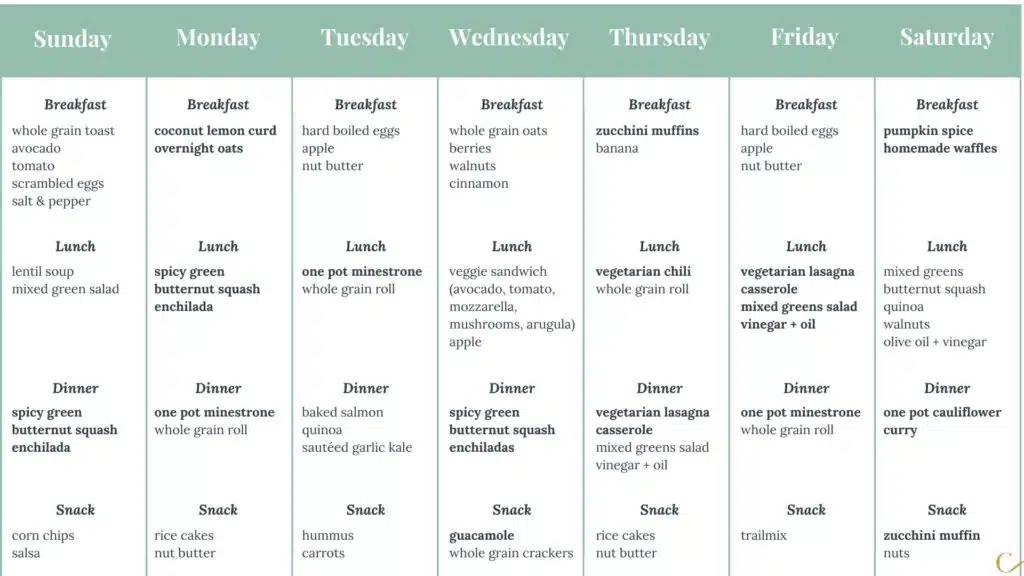
Spicy Green Butternut Squash Enchiladas
Coconut Lemon Curd Overnight Oats
Pumpkin Spice Homemade Waffles
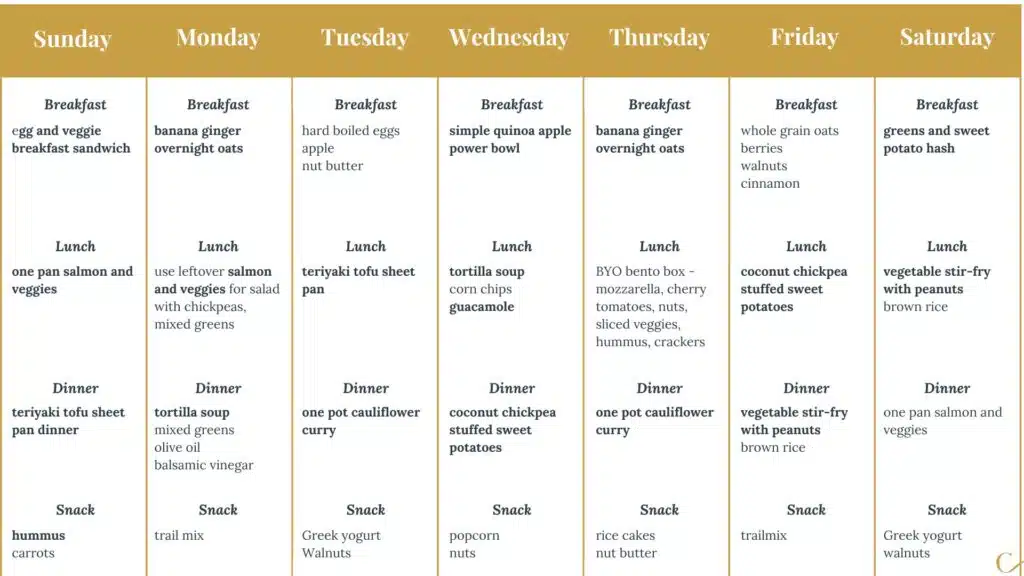
Egg and Veggie Breakfast Sandwich
One Pan Salmon and Veggies by Real Food Dietitians
Teriyaki Tofu Sheet Pan Dinner
Tortilla Soup by Feel Good Foodie
Simple Quinoa Apple Power Bowl
Coconut Chickpea Stuffed Sweet Potatoes
Vegetable Stir Fry with Peanuts
Greens and Sweet Potato Hash by Morton Salt
Blueberry Coconut Oatmeal Bake
Chipotle Tempeh Tacos by Oh My Veggies
Easy Vegan Pasta with Summer Vegetables (Harvest Vegan Pasta) by Dietitian Debbie
One Pot Red Lentil Soup by Minimalist Baker
Chickpea and Black Bean Veggie Burgers
Wild Blueberry Oatmeal Smoothie
Garlic Chili Roasted Brussels Sprouts
The Anti-Inflammatory Fatty Liver Guide
For personalized nutrition care, work with our dietitian team. Schedule here.
Anti-Inflammatory Plant-Based Eating 101. This is a great place to find more great recipes, information on benefits of plant-based approach, shopping and budget guides, and more meal plans for anti-inflammatory eating.
.webp)
Good luck, and happy cooking!
GINGER HULTIN NUTRITION SEATTLE
158 SW 148th St #1012
Burien, WA 98166
Phone: 509-557-0545
Fax: 206-539-0062
Ginger@gingerhultinnutrition.com