

Vitamin D is often called “the sunshine vitamin,” but relying on sunlight alone can make getting enough feel confusing. Between seasonal changes, sunscreen use, indoor lifestyles, and limited food sources, many people are not meeting their needs. In fact, it’s estimated that more than 40% of adults in the United States may have low vitamin D levels.
For vegetarians and people following a more plant-based eating pattern, getting enough vitamin D can feel even more challenging because many traditional vitamin D sources come from fish and other animal products. The good news is that there are still several vegetarian vitamin D foods that can help support healthy intake.
From fortified plant-based milks to UV-exposed mushrooms, small choices throughout the day can make a meaningful difference. Understanding where vitamin D comes from, how much you need, and which foods contain it can help you feel more confident about supporting your long-term health.
Vitamin D is a fat-soluble vitamin that plays several important roles in the body, including supporting bone health, immune function, inflammation regulation, and mood.
Vitamin D helps your body absorb calcium from the foods you eat. Without enough vitamin D, calcium absorption becomes less effective, which can weaken bones over time.
Low vitamin D levels may increase the risk of:
Because vitamin D and calcium work together, maintaining adequate intake of both nutrients is important for lifelong bone health.
Vitamin D also supports immune health by helping immune cells recognize and respond to infections appropriately. Research has linked low vitamin D levels with an increased risk of illness, particularly respiratory infections.
While vitamin D is not a cure-all, maintaining healthy levels may help support normal immune function and overall wellness.
Researchers continue to study vitamin D’s role in inflammation regulation. Some studies have found that adequate vitamin D levels are associated with lower levels of inflammatory markers like C-reactive protein (CRP).
This is especially relevant for people managing chronic inflammatory conditions such as:
More research is still needed, but maintaining healthy vitamin D levels appears to play a supportive role in overall inflammatory balance.
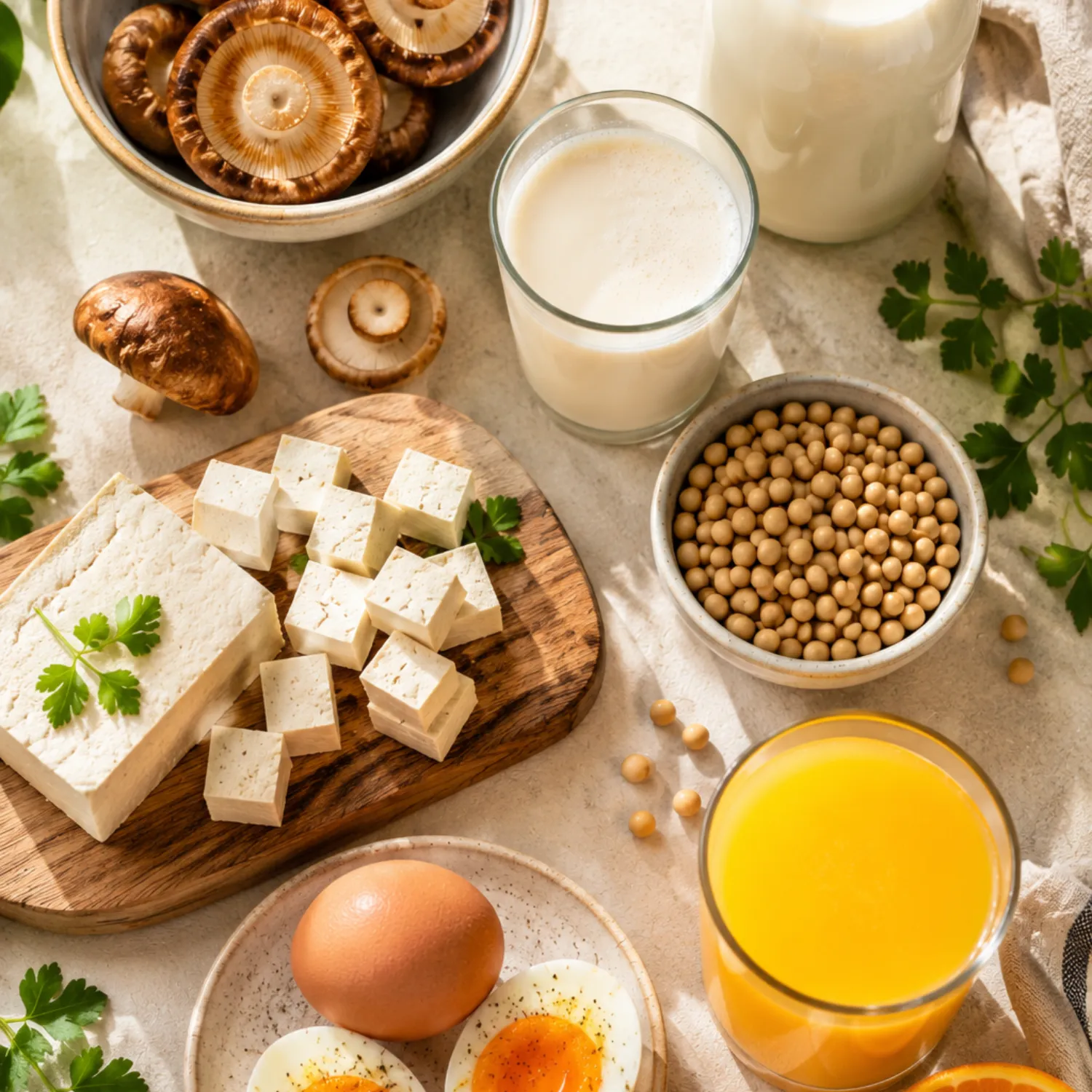
Many people associate vitamin D with fatty fish and cod liver oil, but there are still several vegetarian vitamin D foods that can help increase intake.
Some mushrooms naturally contain vitamin D2 when they are exposed to ultraviolet (UV) light during growing or processing. However, not all mushrooms are grown this way, so it’s important to check labels carefully.
UV-exposed mushrooms can provide approximately 400 IU of vitamin D per 3-ounce serving.
Easy ways to use mushrooms:
Check out my Stuffed Mushrooms with Panko recipe for an easy way to include more mushrooms in your routine.
Many fortified non-dairy milks contain vitamin D and calcium, making them one of the most practical vegetarian vitamin D foods.
Common fortified options include:
Most fortified plant milks provide about 100 IU of vitamin D per cup, though amounts vary by brand.
Smoothies are an easy way to include fortified milk in your routine. Try using fortified plant milk in:
For lacto-vegetarians, dairy milk and yogurt are also reliable vitamin D sources. Many dairy products in the United States have been fortified with vitamin D since the 1930s.
One cup of fortified milk typically provides around 100 IU of vitamin D.
Some packaged orange juices are fortified with vitamin D and calcium. Like plant-based milks, fortified orange juice may contain approximately 100 IU per serving.
Freshly squeezed orange juice does not naturally contain significant vitamin D, so reading labels is important.
Some tofu products are fortified with vitamin D, making them another excellent vegetarian option.
Fortified tofu works well in:
Because fortification varies by brand, checking the nutrition label is key.
This Simple Baked Tofu recipe is an easy way to add tofu to salads, bowls, and wraps.
Egg yolks naturally contain small amounts of vitamin D, with about 40 IU per egg.
Although eggs alone are unlikely to meet your full vitamin D needs, they can still contribute to overall intake as part of a balanced vegetarian diet.
There are two main forms of vitamin D:
Vitamin D2 is typically found in plant foods and fortified products, while vitamin D3 is commonly found in animal-based foods.
Some supplements now offer vegetarian or vegan vitamin D3 sourced from lichen, which may be an option for those avoiding animal products.
The current recommendation for most adults is 600 IU of vitamin D daily, while adults over age 70 are advised to consume 800 IU daily.
However, vitamin D needs can vary based on factors like:
Because needs vary, the best way to assess vitamin D status is through a blood test ordered by your healthcare provider.
Some vegetarians may benefit from supplementation, especially during winter months or if blood levels are low.
However, more is not always better. Vitamin D is a fat-soluble vitamin, meaning excessive supplementation can lead to toxicity over time.
Before starting supplements, it’s helpful to:
Because vitamin D is fat-soluble, it is best absorbed when consumed with foods containing fat.
Helpful pairing ideas include:
Consistency matters more than perfection. Including vegetarian vitamin D foods regularly throughout the week can help support healthier intake over time.
Some of the best vegetarian vitamin D foods include UV-exposed mushrooms, fortified plant-based milk, fortified tofu, eggs, dairy products, and fortified orange juice.
It depends on the individual. Some vegetarians may meet their needs through fortified foods and sunlight exposure, while others may require supplementation.
Yes, but only mushrooms exposed to UV light contain meaningful amounts of vitamin D. Always check labels.
Many fortified plant milks provide about 100 IU of vitamin D per serving and can be an easy way to support intake.
Yes. Vitamin D is best absorbed when consumed with a meal or snack containing fat.
Finding vegetarian vitamin D foods may take a little more intention, but it is absolutely possible to support healthy intake with a balanced approach.
UV-exposed mushrooms, fortified plant-based milks, tofu, eggs, dairy products, and fortified orange juice can all contribute to your vitamin D intake. Depending on your individual needs, supplements may also play a role.
If you’re wondering whether you’re getting enough vitamin D or want support building a more balanced vegetarian or anti-inflammatory eating pattern, working with a registered dietitian can help simplify the process.
Book a discovery call to learn more about working together and whether nutrition counseling may be a good fit for you.
GINGER HULTIN NUTRITION SEATTLE
158 SW 148th St #1012
Burien, WA 98166
Phone: 509-557-0545
Fax: 206-539-0062
Ginger@gingerhultinnutrition.com