

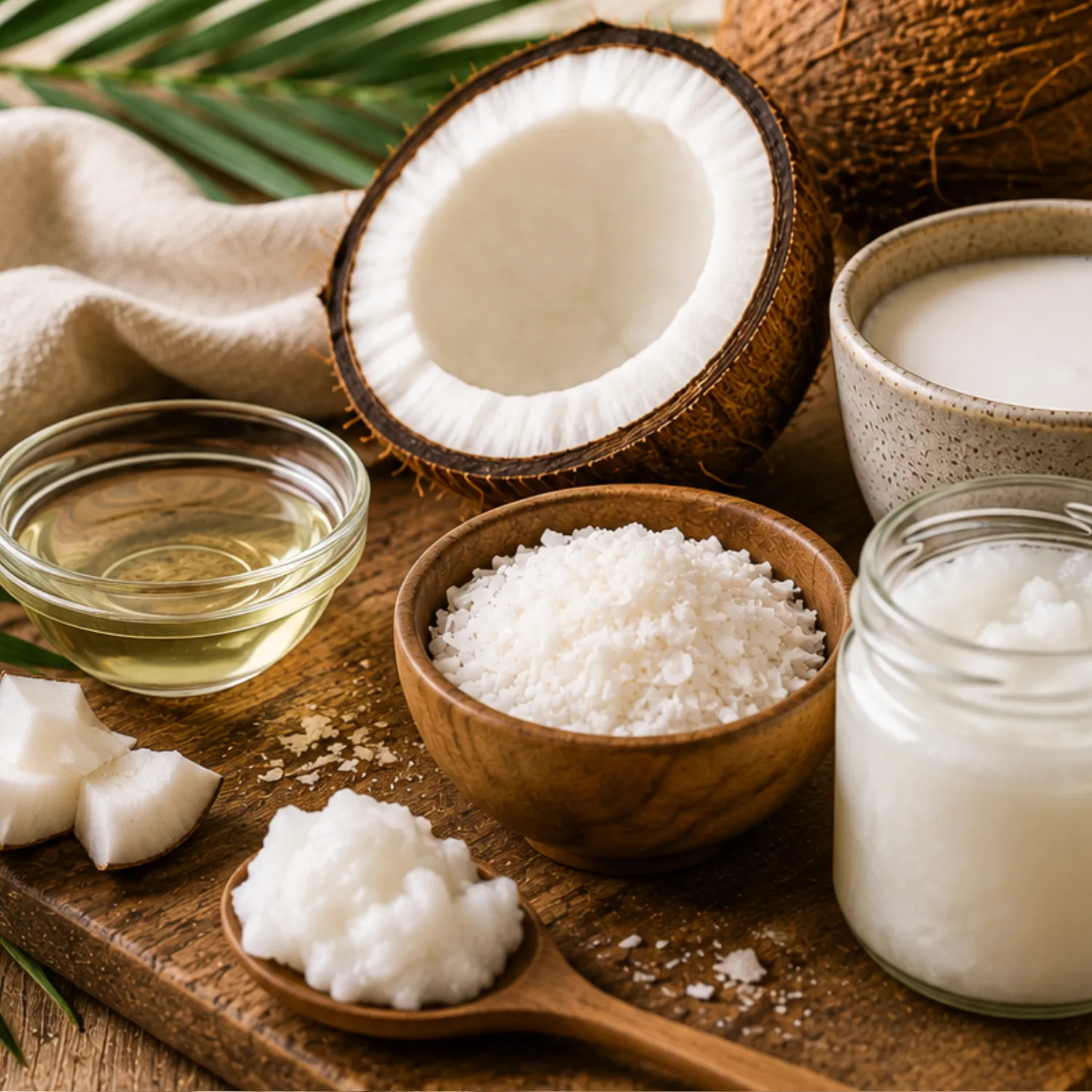
You’ve still got questions about coconut, and I’m here to break it down for you. Coconut comes in many forms and can be used in and out of the kitchen. Did you know that coconut husk can be used to make mats, brushes, and ropes, as well as burnt to repel mosquitoes? In the kitchen, coconut is a versatile ingredient that can be used in any meal of the day. While some speak of coconut almost as if it’s magical, it’s not a universal cure-all. In. So: Is Coconut Healthy? Here’s what we know.
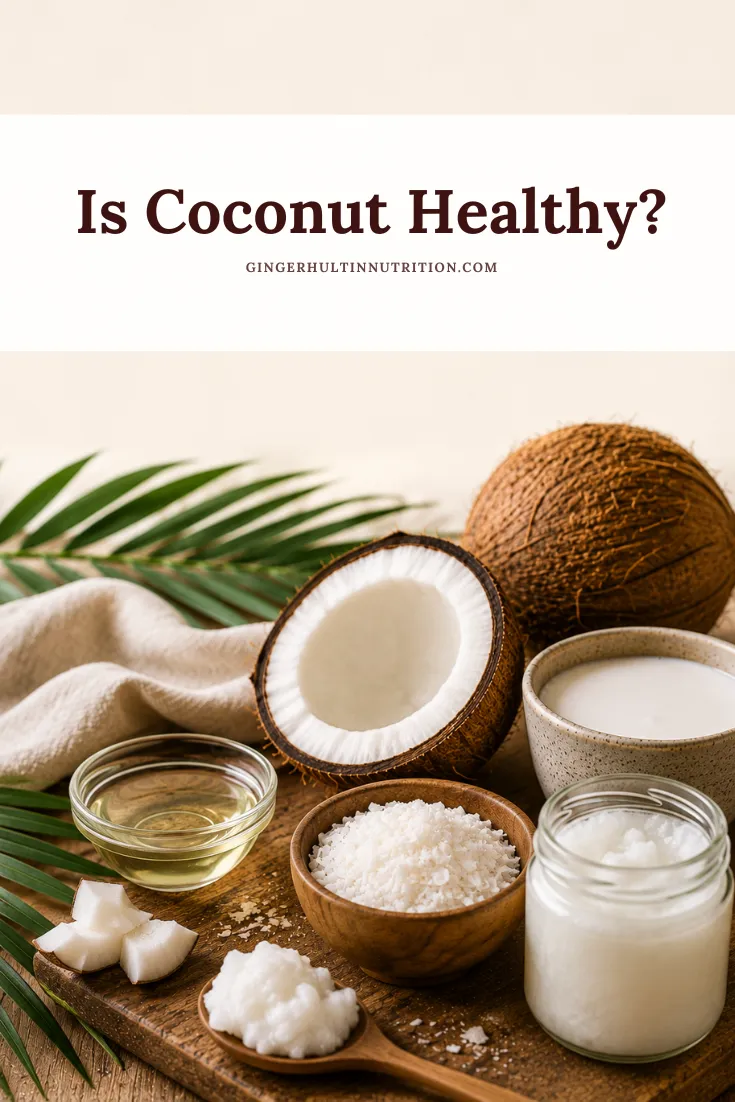
When you hear “coconut”, what comes to mind? You may think of actual coconut meat, coconut oil, coconut flakes… these kinds of foods. And you’re right! You should also be thinking about coconut milk, coconut cream, coconut oil, and its derivative, “MCT”. Coconut contains high levels of saturated fat, but tastes great and has many uses in recipes and cooking.
Coconut oil and MCT oil are sometimes used interchangeably, but they are not the same. MCT oil is derived from coconut or palm kernel oil through a refining process that removes everything except the MCTs. Coconut oil is about 54% MCT; it also contains LCT (long-chain triglycerides) and some unsaturated fats.
Here are some coconut-related pieces I’ve written or am featured in for additional balanced, evidence-based info on both coconut and MCT oil:
USA Today Coconut Oil Still Isn’t Healthy
Vitamin Shoppe Coconut Oil vs MCT
Daily Burn Coconut Vinegar for Probiotics
One thing you might notice people exploring in these pieces is this all-or-nothing, black-or-white, healthy-or-not approach. Is coconut healthy? Will coconut oil kill you or cure you? What about MCT oil? These are the kind of questions I get as a registered dietitian nutritionist; I’m afraid it’s more complicated than that. It’s hard to study what people eat. How much coconut oil or MCT are they consuming? What else are they eating all day, every day? Do they exercise? Smoke? Drink? Sleep? What’s their metabolism like? What are their genes doing?
The American Heart Association recommends that saturated fat in the diet be limited to 5-6% of total calories. On a 2000-calorie diet, that’s 11-13 grams per day. One tablespoon of coconut oil has 12 grams of saturated fat, so yeah…it adds up. I never recommend my clients drink it in smoothies or add it to every recipe throughout the day. I think the American Heart Association’s recommendation to include saturated fat, but limit it to 5-6% of total calories, makes sense. There are many other types of fats and oils that aren’t saturated that should be in the diet as well: olives, olive oil, nuts, seeds, avocado, avocado oil - fun foods! It really depends on your personal health history, family history, labs, and goals; as with so many nutrition recommendations, it’s hard to tell you for sure whether you should or should not eat coconut without meeting with you 1:1 to discuss.
Whenever I talk to people about being aware of the fat in their diet, I often get pushback about what happened in the 1990’s when we replaced fat with sugar and refined carbohydrates. I don’t think any health care provider would state that went well - it didn’t. Sugar shouldn’t generally replace anything. What I see sometimes now is people including more saturated fat in the diet, and there are some benefits - feeling full and satisfied for one. Sometimes, though, as people liberalize fat in the diet and start eating more, they either maintain their current sugar/refined carbohydrate status or even add in more (remember - many saturated fat sources are rich in sugar too - baked goods or chocolate for example).
Just like with the ketogenic diet, I want to tell you here exactly what I think of it, as a nutrition expert. I think coconut oil is delicious! I use it in cooking. I have a jar of it, and it lasts me about a year. I use it to grease pans or for stir-fries, maybe 2-3 times per month. I use shredded coconut in recipes a couple of times per month. It’s a beautiful garnish and adds a nice complexity of texture and flavor. I use coconut oil moderately, and I feel great about it because I use a variety of other fats, too.
I do not use MCT, however - it can cause stomach upset, it’s very rich in calories, and I don’t see a reason to use it for my needs. I have suggested it clinically, for very ill people in the hospital for a variety of reasons, so my suggestion is generally to use it if it’s medically necessary for you, but otherwise, stick to whole food sources of coconut products.
If you want some of my favorite coconut recipes, I’ve got them here for you. Enjoy!
Coconut Cherry Energy Oat Balls
GINGER HULTIN NUTRITION SEATTLE
158 SW 148th St #1012
Burien, WA 98166
Phone: 509-557-0545
Fax: 206-539-0062
Ginger@gingerhultinnutrition.com