

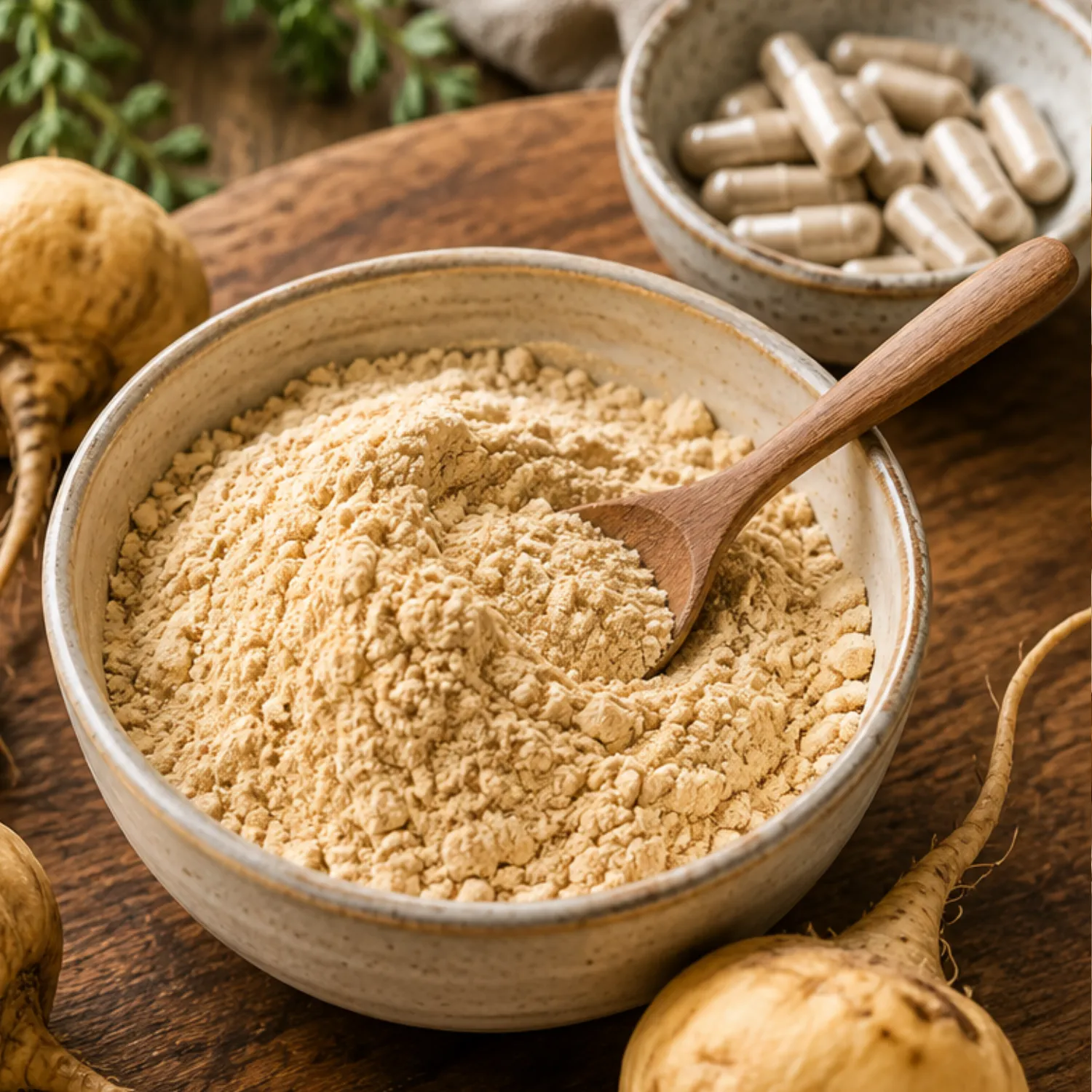
Maca: a hormone-balancing root used in South America that you’ll likely see popping up in your local natural food or supplement store sometime in the very near future if you haven’t already noticed it. Never heard of maca? It’s still somewhat of a new trend, but it’s showing up on menus around the globe for good reason. There is some really interesting information about the health benefits of maca root, including how it’s used for hormone balance and even maca root for PCOS.
Maca grows wild at high elevations in Peru, Bolivia, Paraguay, and Argentina and now continues gaining popularity in U.S. cuisine. A relative of the radish, maca often appears in a brilliant yellow color with an odor similar to butterscotch. Traditionally, maca root was roasted in a pit with other vegetables or dried and ground into a powder. Maca is valued for its health benefits, and dried maca root was historically traded. Now you can find maca featured in main-dish, dessert, and drink recipes. Maca can be added to meals as the powder or cooked root, or taken as a supplement in capsule form.
A member of the Brassica family, maca contains similar health benefits to other cruciferous vegetables (think cauliflower, broccoli, kale, and Brussels sprouts), but is also known for its potential to support libido, fertility, mood, and overall well-being. Research suggests that different varieties of maca may have distinct nutritional profiles and biological effects, highlighting the importance of understanding the source and type of maca being used. I’m here to explore the benefits of maca root for PCOS with you today!
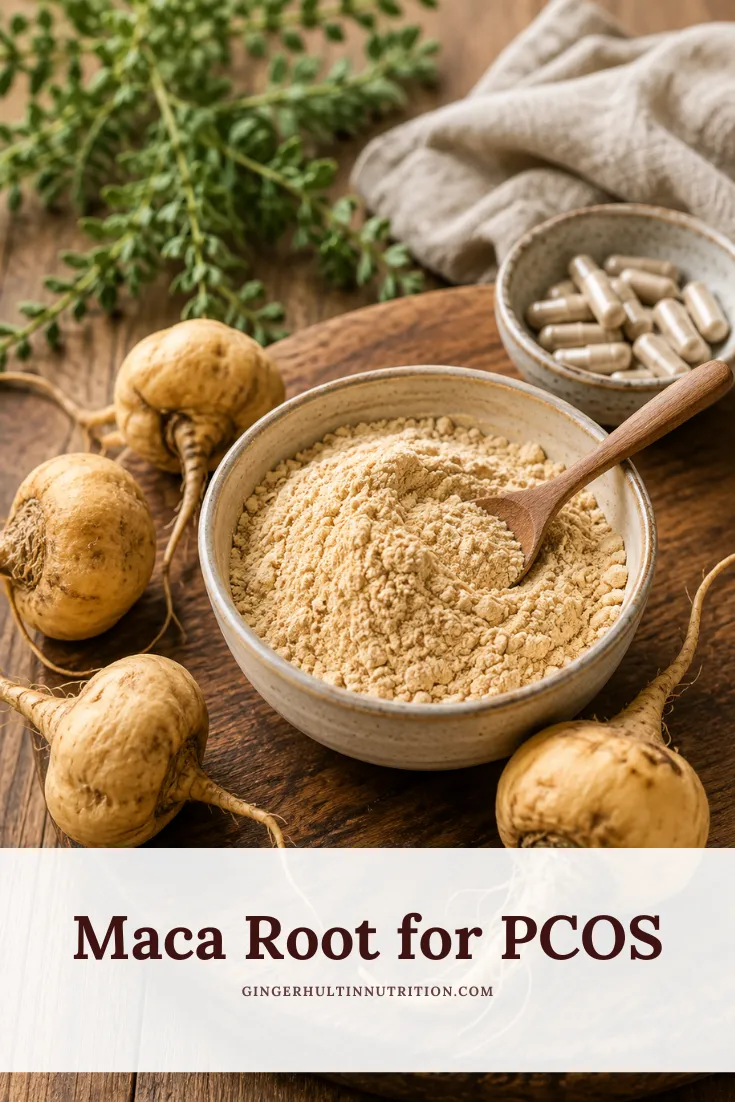
Aside from showing up on menus around the world as a nutrient-dense ingredient, maca is used for many health conditions, from anemia to chronic fatigue syndrome, and to enhance energy, athletic performance, and even memory. More recently, some research has examined maca root for PCOS, or polycystic ovary syndrome. It is best known for aiding in female hormone imbalance, enhancing fertility in men and women, for sexual dysfunction associated with antidepressant use, menopausal symptoms, and to boost libido. For these therapeutic effects, you’ll find maca in supplement form - in powders and pills. Keep in mind that most research on maca needs further investigation, and some is of questionable clinical significance.
Here’s a breakdown of some of the studies and considerations you should know about before you try maca root for PCOS or any other reason yourself.
Maca is best known for aiding in female hormone imbalance, enhancing fertility in men and women, and boosting libido. Ancient cultures have used it for these health reasons for hundreds of years, and it’s still attracting attention around the world because these issues affect many people.
It may also help the body adapt to stress by reducing stress hormones like cortisol. When cortisol is high, the body feels like it’s in permanent fight-or-flight mode, and it can cause side effects like weight gain and hormonal imbalance because, after all, cortisol is a hormone.
Some studies in humans found a perceived increase in mood and a decrease in depression and anxiety when people took maca for 12 weeks. Maca’s impact on mood is likely due to the same mechanism that supports hormonal balance. Hormones have a lot to do with the way we feel, so any hormonal imbalances can cause us to feel depressed, anxious, or just off. Maca is considered an adaptogen because it helps the body adapt to stress, which can lead to a better sense of well-being and an overall elevated mood.
Maca may help balance estrogen and progesterone in menopause. Maca is not a hormone, but it can directly influence hormonal balance. Women taking maca reported fewer hot flashes and increased energy. More human studies are needed to determine if this is the case. Even so, the mood and libido-boosting properties of maca could be helpful during menopause for some people.
Metabolic syndrome is a condition that includes high blood pressure, high blood sugar, elevated triglycerides, and a high waist circumference. It can put those affected at greater risk for heart disease and type two diabetes. Some small studies in humans showed decreased symptoms of metabolic syndrome, including decreased blood pressure and better glucose control. However, much of the research on maca has been conducted in animal studies, and further investigation is yet to be done.
Polycystic ovary syndrome (PCOS) is a hormonal condition that can affect ovulation, fertility, metabolism, and overall health. While maca is sometimes promoted as a natural remedy for PCOS, the evidence in humans is extremely limited.
An animal study examined the effects of maca root in rats with experimentally induced PCOS. Researchers found that maca supplementation improved several markers of oxidative stress and appeared to reduce some of the ovarian changes associated with PCOS. These findings suggest that maca may have antioxidant properties relevant to PCOS. However, it is important to note that this was a study in rats, not humans, and results from animal studies do not always translate to the same outcomes in people. More high-quality human research is needed before maca root can be recommended as a treatment for PCOS.
For safety, keep in mind that because maca extracts may have estrogenic effects, women with hormone-sensitive conditions like breast, uterine, or ovarian cancer, endometriosis, or uterine fibroids should avoid excessive intake in food as well as taking supplement form. Definitely discuss with your doctor or dietitian if you have any questions about taking a supplement such as maca. I’m always here to chat about whether or not it’s right for you. The food source can likely be incorporated safely for most people, but again - make sure to use it appropriately.
Maca eaten as a food source appears safe with no reported adverse side effects. It is a root that, like other roots, contains mostly carbohydrates with a small amount of protein and very little fat. You can find it baked or roasted, in soup, and sometimes in a fermented drink called maca chicha. It is a nutrient-rich food that contains minerals like iron, calcium, zinc, potassium, and copper as well as B vitamins and vitamins C and E.
Maca does need to be cooked, boiled, or dried before consumption and is not generally eaten raw. The indigenous people had wisdom on this, and it was always traditionally heated before consumption. Because maca is grown in humid conditions, raw maca can attract a mold that produces toxins that are carcinogenic and can affect the gut microbiome. Heat destroys this mold and the compounds it produces, so cooked maca is safe to eat. Cooking maca does not reduce its impact on health. The beneficial compounds in maca not only tolerate heat but may even be more active after being heated.
GINGER HULTIN NUTRITION SEATTLE
158 SW 148th St #1012
Burien, WA 98166
Phone: 509-557-0545
Fax: 206-539-0062
Ginger@gingerhultinnutrition.com